 Skip to content

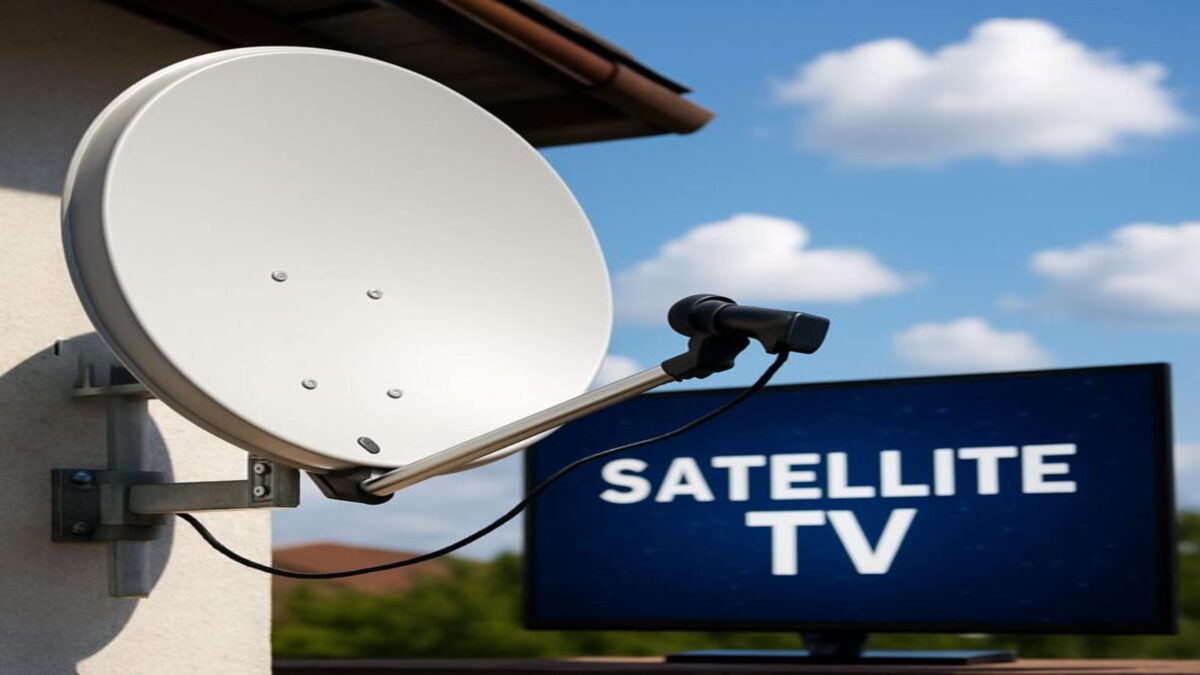
Satellite TV can be a good choice for rural homes, especially where cable television is unavailable or internet service is not suitable for frequent streaming. Providers such as DISH TV and DIRECTV can deliver traditional television programming through a satellite dish without requiring cable or fiber infrastructure at the property.
However, satellite television is not the best option for every rural household. Trees, terrain, installation conditions, weather interruptions, programming preferences, and total monthly costs all affect whether the service is worthwhile.
This guide explains the advantages and disadvantages of satellite TV, how it compares with streaming, and what rural homeowners should check before ordering.
Why Is Satellite TV Popular in Rural Areas?
Satellite television can reach many properties that are outside traditional cable television service areas.
Unlike cable TV, satellite television does not require a provider’s physical television cable network to extend down the road to the home.
Instead, a compatible satellite dish receives programming from the provider’s satellite network.
This can make satellite TV worth considering for:
- Rural homes without cable television infrastructure.
- Farmhouses and ranch residences.
- Cabins and remote vacation properties.
- Homes where internet bandwidth is limited.
- Households that prefer traditional live television channels.
However, satellite TV still requires address qualification, suitable installation conditions, and an active subscription.
What Are the Advantages of Satellite TV for Rural Homes?
1. Service Without Cable Infrastructure
Satellite television can serve qualifying rural properties without requiring cable or fiber television infrastructure.
This is one of its most important advantages for homes located far from established wired service networks.
2. Traditional Live Television
DISH and DIRECTV offer television packages that may include entertainment, news, sports, and local broadcast programming.
The available channels depend on the provider, package, address, and applicable programming agreements.
For households that prefer a familiar channel guide and traditional television viewing, satellite TV may be more convenient than managing multiple streaming subscriptions.
3. Basic TV Does Not Require Home Internet
Basic satellite-delivered television does not generally require a separate home broadband subscription.
That can be valuable for rural households where internet connections are slow, congested, or subject to data-management policies.
However, some streaming applications, On Demand programming, and connected receiver features require internet access.
4. DVR and Multiple Television Options
Compatible satellite television receivers can provide DVR recording, live television controls, and access to programming on multiple televisions.
For example, DISH offers Hopper receivers and compatible Joey equipment for qualifying whole-home configurations.
DIRECTV offers Genie equipment and compatible clients, with features that vary by model.
Additional receiver fees and equipment requirements may apply.
What Are the Disadvantages of Satellite TV in Rural Areas?
Satellite television has limitations that should be considered before ordering.
Weather-Related Interruptions
Heavy rain, significant snow accumulation, and other conditions affecting satellite reception can temporarily interrupt programming.
Neither DISH nor DIRECTV should be considered immune to severe weather.
Tree and Terrain Obstructions
Satellite television requires a suitable view toward the satellites used by the selected service.
Trees, buildings, and terrain can obstruct the signal.
Some properties may require an alternate mounting location, while others may not have a practical installation option.
Monthly Costs and Service Commitments
Satellite TV may involve programming charges, receiver fees, equipment costs, installation expenses, and contractual obligations.
Promotional prices may change, and early termination charges can apply under some agreements.
Limited Flexibility Compared With Some Streaming Services
Some streaming services offer month-to-month subscriptions that can be changed or canceled without the same type of long-term television commitment.
However, streaming still requires a suitable internet connection, and multiple subscriptions can become expensive.
How Does Satellite TV Work?
Traditional satellite television uses satellites in geostationary orbit to deliver programming to receiving equipment at the home.
A properly installed satellite dish receives the signal and sends it to a compatible receiver, which processes the programming for display on the television.
The receiving dish must be aimed toward the required satellites and have an adequately clear signal path.
Once installed, the dish generally remains in a fixed position.
Satellite television is different from satellite internet. Traditional satellite TV delivers television programming, while satellite internet provides broadband connectivity for online activities.
Which Satellite TV Providers Serve Rural Homes?
DISH TV and DIRECTV are two major satellite television providers serving qualifying rural properties in the United States.
DISH TV
DISH offers satellite television packages, compatible receiver equipment, and DVR options.
Its Hopper family includes different receiver models with varying recording capacities and whole-home features.
For more information, visit our DISH TV guide.
DIRECTV Satellite
DIRECTV also offers satellite television packages with compatible Genie equipment and selected DVR features.
Channel availability, equipment options, sports programming, and service terms vary by offer.
DIRECTV’s residential satellite television service should be distinguished from its internet-delivered television products.
For a more detailed comparison, see DISH TV vs. DIRECTV for Rural Homes.
Is DISH or DIRECTV Better for Rural Homes?
Neither provider is automatically better for every rural property.
When comparing DISH and DIRECTV, consider:
- The channels and sports programming you want.
- Local channel availability at your address.
- DVR and whole-home receiver capabilities.
- Monthly programming and equipment charges.
- Promotional pricing and contract terms.
- Installation feasibility and satellite visibility.
Do not assume that one provider offers every sports channel or that a particular package is available at every address.
For example, residential NFL Sunday Ticket is distributed through YouTube and YouTube TV rather than being included automatically with DIRECTV Genie equipment.
Is Satellite TV Better Than Streaming in Rural Areas?
Satellite television and internet streaming have different advantages.
Satellite TV delivers traditional programming through a dedicated receiving system. Basic satellite-delivered channels do not consume household broadband data.
Streaming services deliver television over an internet connection and require sufficient bandwidth and compatible devices.
Satellite TV may be preferable when:
- Internet speeds are too limited for consistent streaming.
- The household wants traditional live channels.
- Internet data-management policies make frequent streaming less practical.
- The property qualifies for satellite television installation.
Streaming may be preferable when:
- The home has adequate and consistent broadband performance.
- The household primarily watches on-demand entertainment.
- Flexible subscriptions are important.
- The desired channels are available through streaming services.
Some households combine satellite television with selected streaming applications.
How Much Internet Speed Do You Need for Streaming Instead?
Streaming requirements depend on the number of simultaneous streams and video resolution.
As general planning estimates:
- Standard-definition video: Around 3 Mbps or more per stream for some services.
- HD video: Approximately 5 to 10 Mbps per stream.
- 4K video: Approximately 15 to 25 Mbps or more per stream.
Actual requirements vary by streaming service, network conditions, and device.
A household with one HD television may not require an expensive high-speed internet plan. Several simultaneous 4K streams require more capacity.
For rural internet comparisons, see Starlink vs. Hughesnet and Starlink vs. T-Mobile Home Internet.
How Much Does Satellite TV Cost for a Rural Home?
The cost of satellite television depends on the provider, programming package, receiver equipment, number of televisions, and current promotions.
Before ordering, compare the complete cost rather than relying only on an advertised introductory price.
Important expenses may include:
- Monthly television programming charges.
- DVR and additional receiver fees.
- Premium channels and sports packages.
- Equipment purchase or lease charges, when applicable.
- Installation or activation fees.
- Taxes and applicable surcharges.
- Price changes after promotional periods.
- Early termination charges under qualifying agreements.
Some promotional offers include standard professional installation, but unusual mounting arrangements, extended cable routes, or other nonstandard work may involve additional charges.
Review the current offers from DISH and DIRECTV before making a decision.
Does Satellite TV Require a Contract?
Contract requirements vary by provider and offer.
Some satellite television promotions require a minimum service commitment, which may be 24 months. Other service arrangements may have different terms.
Before signing up, confirm:
- Whether a minimum service commitment applies.
- How long any advertised price guarantee lasts.
- Whether equipment fees are included in the quoted price.
- What happens if you cancel before the commitment ends.
- Whether leased equipment must be returned.
- Whether moving to another property affects the agreement.
Do not assume that every DISH or DIRECTV package has identical contractual requirements.
Can Satellite TV Be Installed at Any Rural Home?
No. Satellite television can reach many rural properties, but installation is not guaranteed at every address.
The receiving dish needs an adequately clear view toward the satellites required by the selected service.
Installation feasibility can be affected by:
- Tall trees and dense vegetation.
- Hillsides, mountains, and other terrain.
- Nearby buildings and structures.
- Roof or wall construction.
- Property ownership and mounting permissions.
- Access for installation equipment and technicians.
- Suitable cable routing and electrical power.
A property may qualify for satellite coverage but still lack a practical mounting location.
Does the Satellite Dish Have to Be on the Roof?
No. Depending on the property and equipment, an approved wall mount or ground-mounted pole may be appropriate.
Alternative mounting locations can be useful when a roof is unsuitable or when another part of the property provides better satellite visibility.
However, nonstandard mounting arrangements may involve additional materials, labor, or charges.
For related information, see our DISH TV Installation guide.
Can Trees Block Satellite TV?
Yes. Trees and other obstructions can weaken or block the satellite signal.
Seasonal foliage matters because a location that appears clear during winter may become obstructed when leaves return.
Possible solutions include an approved alternate mounting location or selective tree trimming when appropriate and permitted.
However, some heavily wooded properties may not have a practical satellite television installation location.
Read Can DISH TV Work on a Heavily Wooded Property? for more information.
How Reliable Is Satellite TV During Bad Weather?
Satellite television can provide dependable reception during normal operating conditions, but severe weather may temporarily interrupt service.
Heavy rain, significant snow accumulation, and other atmospheric conditions can weaken satellite signals. This is sometimes called rain fade.
Proper installation and an adequately clear satellite view are important, but neither eliminates every weather-related interruption.
Rural households should also consider electrical power. The satellite receiver, television, and associated equipment require electricity.
When a power outage occurs, the system generally cannot operate unless suitable backup power is available.
Will a Larger Satellite Dish Prevent Weather Outages?
Not necessarily. Dish size and equipment design affect reception, but a larger dish is not a universal solution for weather interruptions or tree obstructions.
Customers should use compatible equipment approved for the selected television system rather than purchasing a different dish based on an unsupported performance claim.
If reception problems continue during ordinary weather, ask the provider or an appropriate technician to check the installation and equipment.
Can You Combine Satellite TV With Rural Internet?
Yes. Satellite television and home internet are separate services that can operate at the same qualifying property.
For example, a household may use DISH television for traditional live programming and a separate Viasat, Starlink, fixed wireless, or other available connection for internet access.
Basic satellite-delivered television does not use the household’s broadband connection, but supported streaming applications and internet-delivered features may require it.
For rural properties, compare internet availability and performance separately from satellite television installation eligibility.
Our guide to Viasat availability in rural areas explains why address qualification matters.
You can also review Viasat Fixed Wireless vs. Viasat Satellite to understand how different internet
How Reliable Is Satellite TV During Bad Weather?
Satellite television generally works during ordinary weather conditions, but severe storms can temporarily interfere with reception.
Heavy rain, significant snow accumulation, and other atmospheric conditions can weaken the signal traveling between the satellite and the receiving dish. This is commonly called rain fade.
Weather-related interruptions may cause picture freezing, pixelation, or temporary loss of programming.
Proper dish alignment, secure mounting, and a clear satellite signal path help maintain normal reception, but they cannot prevent every weather-related interruption.
Rural homeowners should also consider electrical outages. Satellite receivers and televisions require electricity, so an outage can interrupt viewing even when the satellite signal itself remains available.
Can Trees and Hills Block Satellite TV?
Yes. Trees, hillsides, buildings, and other obstructions can prevent a satellite dish from receiving the required signal.
For most locations in the continental United States, satellite television dishes require an adequately clear view toward specific positions in the southern portion of the sky.
Seasonal foliage matters. A dish that receives a usable signal during winter may experience problems when nearby trees develop leaves.
Possible mounting arrangements include an approved roof, wall, or ground-mounted pole, depending on the property and equipment.
Some heavily wooded or mountainous properties may not have a practical installation location.
Before ordering, confirm that the property has a suitable satellite view and that the proposed mounting arrangement meets the applicable requirements.
Does Satellite TV Work Without Internet?
Yes. Basic satellite-delivered television does not generally require a separate home broadband subscription.
DISH and DIRECTV satellite systems receive traditional television programming through their satellite equipment.
However, internet-connected features may require broadband, including:
- Supported streaming applications.
- Selected internet-delivered On Demand programming.
- Compatible remote-viewing services.
- Other connected receiver features.
This distinction can be useful for rural households where broadband performance is limited or subject to data-management policies.
Traditional satellite TV does not use your home internet connection to deliver ordinary satellite channels.
How Much Does Satellite TV Cost for a Rural Home?
Satellite television pricing depends on the provider, programming package, receiver equipment, number of televisions, and available promotions.
When comparing offers, review:
- The monthly television package price.
- Local channel and sports programming availability.
- DVR and additional receiver fees.
- Equipment purchase or lease charges.
- Standard and nonstandard installation costs.
- Taxes and applicable surcharges.
- Promotional price changes.
- Service commitments and early cancellation charges.
Some qualifying offers include standard professional installation, but additional mounting or cabling work may create extra charges.
Do not assume that every provider offers the same contract length, equipment arrangement, or introductory price.
Review the current written offer before ordering.
Does Satellite TV Require a Contract?
Contract requirements depend on the provider and selected promotion.
Some satellite television offers require a minimum service commitment, while other arrangements may have different terms.
Before ordering, ask whether the agreement includes:
- A minimum service term.
- Early termination charges.
- Equipment-return requirements.
- Promotional price changes.
- Additional receiver or service fees.
A lower introductory price is not necessarily the least expensive option over the full service period.
What Equipment Do You Need for Satellite TV?
A typical residential satellite television installation requires:
- A compatible satellite receiving dish.
- An approved mounting arrangement.
- Suitable coaxial cabling and installation components.
- A compatible satellite television receiver.
- A television and appropriate connections.
- Electrical power for the required equipment.
Additional receivers or compatible whole-home equipment may be required for multiple televisions.
The equipment must match the selected provider and television service.
Do not assume that a larger dish is automatically better or that equipment from different satellite television providers is interchangeable.
Can Satellite TV Be Installed on a Farm or Ranch?
Yes, potentially. Satellite television can serve qualifying farmhouses, ranch homes, and other rural residential properties.
The main considerations are satellite visibility, safe equipment mounting, cable routing, electrical power, and service eligibility.
Properties with barns, tall trees, or extensive acreage may require additional planning.
A satellite television system installed at the main house does not automatically provide television service to every detached building on the property.
Additional television locations may require separate equipment or installation arrangements.
Can Satellite TV Work at a Cabin or Seasonal Home?
Satellite television may be appropriate for qualifying cabins and seasonal properties, particularly when cable television is unavailable.
However, occasional-use properties should review service commitments and billing arrangements carefully.
Before ordering, confirm:
- Whether the property qualifies for satellite installation.
- The monthly charges during periods when the property is unoccupied.
- Whether any seasonal service arrangement is available.
- Minimum service commitments and cancellation conditions.
- Equipment and installation requirements.
Do not assume that every satellite television account can be paused without charges.
Can You Combine Satellite TV With Rural Internet?
Yes. Satellite television and home internet are separate services that may operate at the same qualifying property.
For example, a rural household may use DISH television for traditional live channels and a separate Viasat, Starlink, or qualifying fixed wireless connection for internet access.
This can reduce the amount of household internet bandwidth used for television viewing because ordinary satellite-delivered channels do not rely on broadband streaming.
For more information about rural internet choices, see Viasat availability in rural areas and Viasat Fixed Wireless vs. Viasat Satellite.
Satellite internet and satellite television have different equipment and installation requirements. Our guide to what happens during Viasat installation explains the internet installation process separately.
How Do You Decide Whether Satellite TV Is Worth It?
Satellite television may be a good choice when:
- Cable television is unavailable at your address.
- You want traditional live channels and a familiar program guide.
- Your internet connection is unsuitable for frequent streaming.
- Your property has a suitable satellite installation location.
- The programming package and total cost fit your needs.
Another television option may be preferable when:
- Dense trees or terrain prevent adequate satellite reception.
- You primarily watch on-demand streaming content.
- You prefer flexible subscriptions without a long-term television commitment.
- You have suitable broadband and do not need traditional satellite channels.
- The total satellite television cost exceeds your budget.
Compare the available services at your exact address rather than assuming satellite TV is automatically the best or only rural television option.
Frequently Asked Questions About Satellite TV for Rural Homes
Is Satellite TV Reliable in Rural Areas?
Satellite television can provide dependable service under suitable conditions, but reception may be interrupted by severe weather, obstructions, equipment problems, or electrical outages.
Can You Get Satellite TV Without Internet?
Yes. Basic satellite-delivered programming does not generally require a separate broadband subscription. Some streaming, On Demand, and connected receiver features do.
Does Satellite TV Work During a Power Outage?
Not without electricity for the required equipment. An appropriately sized backup-power system may keep the receiver and television operating for a limited period, but it does not guarantee satellite reception during severe weather.
Can You Watch Satellite TV Without a Subscription?
DISH and DIRECTV subscription programming generally requires an active account and authorized receiver. Separate free-to-air satellite systems exist, but they are different from ordinary DISH and DIRECTV residential subscriptions.
How Many Channels Can You Get With Satellite TV?
Channel counts vary by provider, package, location, and programming agreements. Verify the exact channel lineup and local station availability before ordering.
Does a Rural Home Need a Larger Satellite Dish?
Not automatically. The receiving equipment must be compatible with the selected provider and installation requirements. A larger dish is not a universal solution for weather interruptions or blocked satellite signals.
Can Trees Block Satellite TV?
Yes. Trees and other obstructions can interfere with the required satellite signal path. Seasonal foliage and tree growth can also affect reception over time.
Is DISH or DIRECTV Better for Rural Homes?
Neither is automatically better. Compare the channels, receiver equipment, total cost, contract terms, and installation feasibility for your exact property.
The Bottom Line: Is Satellite TV Good for Rural Homes?
Satellite TV can be a worthwhile choice for rural homes, particularly where cable television is unavailable or broadband service is not suitable for frequent streaming.
Its main advantages include access to traditional live television without relying on home internet bandwidth and the ability to serve many qualifying rural properties.
However, satellite visibility, severe weather, equipment requirements, monthly costs, and service commitments must be considered.
Before choosing a provider, confirm installation feasibility and compare the programming packages available at your address.
For help exploring supported rural television and internet options, contact High Speed Internet Now or call (844) WiFi-Man, (844) 943-4626.
Spacelink Installs provides professional installation for Viasat, Starlink, Amazon Leo, and DISH TV in select service areas. Internet service and professional installation availability must be confirmed separately for your location.