 Skip to content
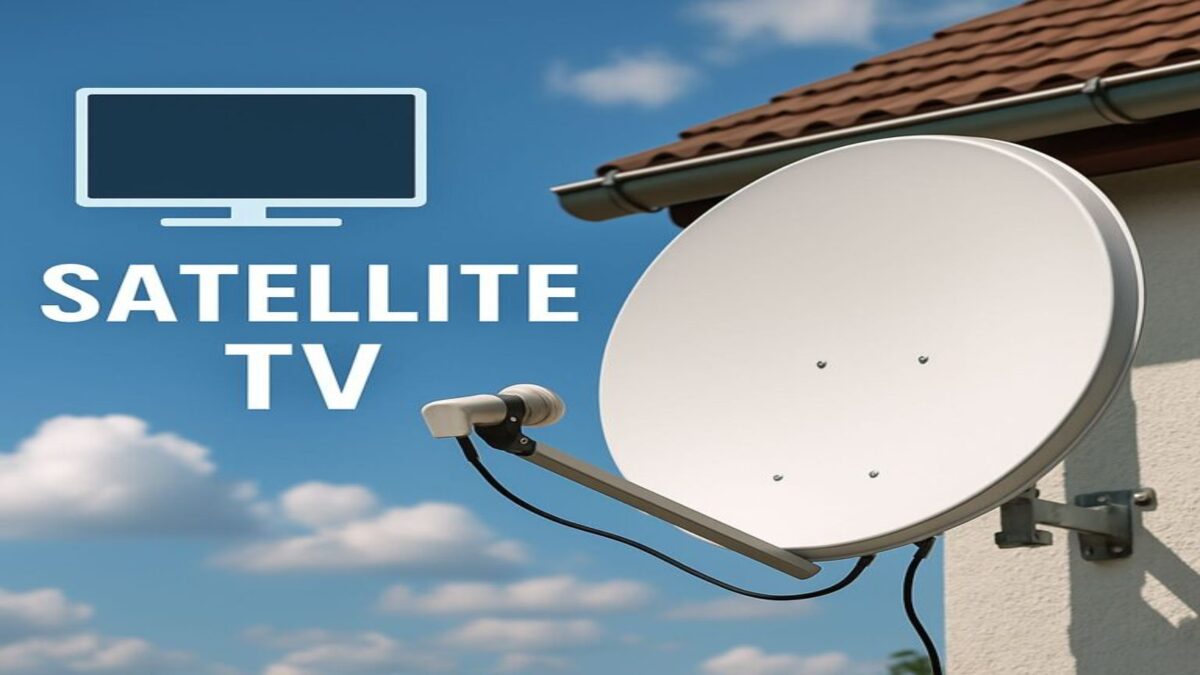
Yes, DISH TV can work on a heavily wooded property, but only if the satellite dish can be installed where it has a sufficiently clear view of the required satellites. Trees, branches, nearby buildings, and terrain can block satellite television signals, even when the receiving equipment is functioning correctly.
Some wooded properties have suitable installation locations on a roof, wall, or open section of the yard. Others may require a professionally evaluated pole mount or selective tree trimming. In some cases, the surrounding trees make satellite television installation impractical.
Before ordering DISH TV, the most important step is determining whether the property has a usable satellite signal path.
Why Do Trees Interfere With DISH TV?
DISH television receives programming from satellites positioned in geostationary orbit approximately 22,300 miles above Earth.
These satellites remain in nearly fixed positions relative to the ground, allowing a properly installed receiving dish to remain aimed toward the required satellite locations.
However, the signal must travel through the atmosphere and reach the dish without significant obstruction.
Dense foliage, branches, trunks, and other objects in the signal path can weaken or block reception.
Common symptoms include:
- Picture freezing or pixelation.
- Intermittent signal-loss messages.
- Channels becoming unavailable.
- Reception worsening when trees develop leaves.
- Signal interruptions when branches move in the wind.
These symptoms do not automatically prove that trees are responsible. Equipment problems, cabling issues, weather, and other factors can produce similar results.
Does DISH TV Need a Clear View of the Southern Sky?
For most locations in the continental United States, DISH satellite television requires an unobstructed view toward particular positions in the southern portion of the sky.
The exact direction and elevation depend on the property’s geographic location and the satellite configuration used by the selected DISH system.
A clear view straight overhead does not necessarily mean the property has a usable view toward the required satellites.
For example, a home may have a large open backyard but still experience signal obstruction from tall trees along the relevant satellite direction.
Similarly, a property surrounded by woods may have a suitable opening between trees that allows a successful installation.
A trained installer can determine the required viewing direction and assess whether the property has an appropriate mounting location.
Can One Large Tree Block DISH TV?
Yes. A single tree can interfere with satellite reception if its trunk, branches, or foliage obstruct the required signal path.
The number of trees on the property is less important than their position relative to the satellite dish and the required satellite direction.
A heavily wooded property may have usable reception when the dish is positioned in a suitable clearing.
Conversely, a property with only a few trees may have reception problems if one tree stands directly in the signal path.
The tree’s height, distance from the proposed dish location, and seasonal foliage all matter.
Can DISH TV Work in Winter but Lose Signal in Summer?
Yes. Seasonal foliage changes can affect satellite reception.
Deciduous trees lose their leaves during colder months. A signal path that appears relatively clear in winter may become obstructed when leaves return during spring and summer.
For this reason, an installation completed during winter should account for the tree canopy during the growing season.
Evergreen trees can create year-round obstructions because their foliage remains relatively dense throughout the year.
Tree growth can also affect a system that previously worked well. A branch that was outside the signal path when the dish was installed may eventually grow into it.
When evaluating a wooded property, consider both current conditions and expected seasonal changes.
How Can You Tell Whether Trees Are Blocking Your DISH Signal?
Possible signs of tree interference include:
- Reception becoming worse after leaves appear.
- Intermittent signal problems during windy weather.
- Some satellite-delivered channels becoming unavailable while others continue working.
- Signal readings changing after nearby vegetation grows.
- A technician identifying an obstruction along the required satellite direction.
However, these symptoms can also result from equipment faults, loose connections, dish misalignment, or weather-related interference.
A particular receiver signal-strength number should not be treated as a universal diagnostic threshold.
For recurring problems, contact DISH support or an appropriate satellite television technician rather than assuming tree removal is necessary.
Can a Satellite Dish Be Moved to Avoid Trees?
Possibly. Relocating the dish may provide a clearer view toward the required satellites.
Potential mounting locations include:
- A suitable section of the roof.
- An approved wall-mounted location.
- A properly designed ground or pole mount.
- Another accessible area of the property with adequate satellite visibility.
Each location must be evaluated for mounting safety, signal visibility, cable routing, grounding and bonding, and any applicable property restrictions.
Moving a dish farther from the house may also increase installation complexity and cost.
Do not assume that any location with open sky will work. The dish must have the correct view toward the satellites required by the service.
Will a Pole Mount Help DISH TV Work on a Wooded Property?
A pole mount may help when a different dish position or elevation provides a clear satellite signal path.
However, a taller pole is not automatically the solution.
The effectiveness of a pole mount depends on:
- The height and position of nearby trees.
- The required satellite direction and elevation.
- The proposed mounting location.
- Structural and wind-load requirements.
- The distance to the receiver equipment.
- Applicable grounding, bonding, and electrical requirements.
A tall mounting structure may require specialized engineering, permits, or installation work.
Before paying for a nonstandard mount, have the proposed location evaluated for both signal visibility and installation feasibility.
For a general overview of residential satellite television installation, visit our DISH TV Installation guide.
Can You Trim Trees to Improve DISH TV Reception?
Selective trimming may help when a limited number of branches obstruct the satellite signal.
However, tree trimming should only be considered after identifying the actual obstruction.
Removing branches that are not in the signal path may provide no improvement.
Before trimming, consider:
- Whether you own the tree.
- Whether local ordinances or property restrictions apply.
- Whether the tree is protected by a conservation agreement.
- Whether the work requires a qualified tree professional.
- Whether a different dish location would avoid the need for trimming.
Do not attempt hazardous tree work near electrical lines, elevated structures, or satellite equipment.
Tree removal is not a prerequisite for every wooded-property installation, and it should not be undertaken without confirming that it will address the actual signal obstruction.
What If the Trees Belong to a Neighbor?
Neighboring trees can obstruct satellite signals even when the dish is installed entirely on your own property.
Do not assume that a blocked satellite signal gives you permission to enter neighboring property or remove branches.
Tree-trimming rights and responsibilities vary by state, property boundary, and local law.
Before considering trimming, discuss the issue with the property owner and obtain appropriate guidance about any legal restrictions.
Where trimming is not permitted or practical, an alternate dish location may be worth evaluating.
Will a Larger Satellite Dish Fix Tree Interference?
A larger satellite dish does not eliminate the need for an adequately clear signal path.
Dish size and design affect signal reception, but significant physical obstructions can still prevent reliable service.
Using equipment that is not approved or compatible with the DISH receiver system can also create additional problems.
Do not purchase a larger dish, amplifier, or other accessory based solely on an online suggestion that it will overcome dense tree cover.
Have the obstruction and equipment configuration evaluated before considering changes.
Can You Switch DISH Satellites to Avoid Trees?
DISH uses particular satellite configurations to deliver programming in different service areas.
Some equipment and locations may support alternative approved configurations, but customers cannot simply select any satellite or transponder to avoid a tree.
Channel availability, receiver compatibility, equipment configuration, and geographic location all affect which satellites can be used.
Only an approved configuration that provides the required programming and equipment compatibility should be considered.
Ask DISH or a qualified installer whether an alternative supported installation arrangement is available for your property.
Can DISH TV Work on a Property Surrounded by Tall Pines?
Possibly, but tall evergreen trees can create particularly challenging installation conditions.
Unlike deciduous trees, pines and other evergreens may obstruct the required satellite view throughout the year.
The installer must determine whether a suitable opening exists in the direction of the required satellites.
Potential alternatives may include another approved mounting location or selective vegetation management when permitted.
Some heavily wooded properties may not have a practical location for reliable DISH satellite reception.
Do not assume that a tower, larger dish, or stronger receiver will solve every obstruction.
What If DISH TV Cannot Be Installed Because of Trees?
If no suitable satellite viewing location is available, consider other television delivery methods.
Possible alternatives include:
- Internet-based live television services when suitable broadband is available.
- Streaming applications for movies and television programs.
- Over-the-air television using a compatible antenna where broadcast signals are available.
- Another television provider whose installation requirements can be evaluated for the property.
DIRECTV satellite television also requires an appropriate satellite view. Its satellite positions and equipment requirements may differ from DISH, but that does not guarantee better reception through trees.
Internet streaming avoids the need for a DISH television satellite signal, but the internet connection must still be available and suitable for streaming.
Can Satellite Internet Work When DISH TV Cannot?
Possibly. Different satellite services have different equipment and sky-view requirements.
Viasat and Hughesnet use geostationary satellite technology, while Starlink uses a low-Earth-orbit satellite network.
A property that cannot receive DISH television may still qualify for a particular internet service, or it may have obstructions that affect multiple satellite systems.
Satellite internet availability and installation feasibility must be evaluated separately.
For more information, see Viasat availability in rural areas and our guide to what happens during Viasat installation. Viasat installation requirements are different from DISH television requirements.
You can also compare Starlink vs. Hughesnet, Starlink vs. T-Mobile Home Internet, and Starlink vs. Verizon Home Internet when considering alternative connectivity technologies.
Can You Stream TV Instead of Installing a Satellite Dish?
Yes, if a suitable broadband connection is available.
Streaming services can deliver television programming over compatible internet connections without requiring a DISH satellite television dish.
However, streaming depends on actual internet speeds, network conditions, data-management policies, and the number of devices using the connection.
For example, Viasat satellite internet may support streaming at qualifying addresses, but its data-management rules and network performance must be considered.
See Is Viasat Good for Streaming TV? for additional guidance.
What Should You Ask Before Scheduling DISH Installation?
Before ordering DISH television for a wooded property, ask about the following:
- Satellite visibility: Is there a suitable view toward the satellites required for the service?
- Seasonal foliage: Could trees obstruct the signal when leaves return?
- Mounting options: Is a roof, wall, ground, or pole mount appropriate?
- Nonstandard work: Would an alternate mount or longer cable route create additional charges?
- Tree trimming: Is vegetation management necessary, permitted, and likely to resolve the obstruction?
- Installation feasibility: What happens if the technician determines that the property cannot receive an adequate signal?
- Service terms: When does the service agreement begin, and what charges apply if installation cannot be completed?
Do not assume that every wooded property qualifies for installation or that a preliminary conversation guarantees a successful final site assessment.
Frequently Asked Questions
Can DISH TV Work With Trees Around the House?
Yes, if the dish has a sufficiently clear view toward the required satellites. Trees elsewhere on the property do not necessarily prevent service.
Will a Single Tree Block DISH TV?
It can. A tree positioned directly in the required signal path may cause partial or complete reception loss.
Will DISH TV Work Better in Winter?
Possibly. Deciduous trees lose their leaves during winter, which can temporarily reduce signal obstruction. Reception may worsen when foliage returns.
Can a Taller Pole Solve Tree Interference?
A taller pole may help if it creates a clear view toward the required satellites. However, it is not a guaranteed solution. The proposed height, mounting structure, signal path, and installation requirements must be evaluated before proceeding.
Can I Trim My Neighbor’s Trees to Improve Reception?
Tree-trimming rights vary by state and local law. Do not enter neighboring property or remove branches without appropriate legal authority or permission. A qualified tree professional and an alternative dish location may be worth considering.
Will a Larger DISH Satellite Dish Work Through Trees?
Not necessarily. A larger dish does not eliminate the need for an adequately clear satellite signal path. Significant physical obstructions can still prevent reliable reception.
How Much Does a Pole Mount Cost?
The cost depends on the mounting design, height, installation location, cable route, labor, and any special requirements. Request an address-specific estimate before approving nonstandard installation work.
Is DIRECTV Better Than DISH for Heavily Wooded Properties?
Neither provider is automatically better. Both require suitable satellite visibility, but their satellite positions and equipment configurations may differ. An installer must evaluate whether either service has a feasible signal path at the property.
Can DISH TV Be Installed Without Cutting Down Trees?
Sometimes. A different roof location, approved wall mount, ground mount, or pole mount may provide a suitable signal path. However, some heavily wooded properties may not have a practical installation location without vegetation changes.
Does DISH TV Guarantee Reception on Wooded Properties?
No installation should be assumed feasible before the property is evaluated. Tree obstructions, terrain, mounting limitations, and other site conditions can prevent adequate satellite reception.
The Bottom Line: Can DISH TV Work on a Heavily Wooded Property?
Yes, DISH TV can work on a heavily wooded property if a suitable installation location provides an adequately clear view toward the required satellites. The number of trees alone does not determine whether service is possible. Their position relative to the satellite signal path is what matters.
Some properties may benefit from a different dish location, an approved pole mount, or selective tree trimming. Others may not have a practical satellite television installation option.
Before ordering, confirm service eligibility, discuss tree coverage and seasonal foliage, and have the proposed mounting arrangement evaluated.
For help exploring supported DISH TV installation options, contact High Speed Internet Now or call (844) WiFi-Man, (844) 943-4626.
Spacelink Installs provides professional installation for Viasat, Starlink, Amazon Leo, and DISH TV in select service areas. Internet service and professional installation availability must be confirmed separately for your location.