 Skip to content
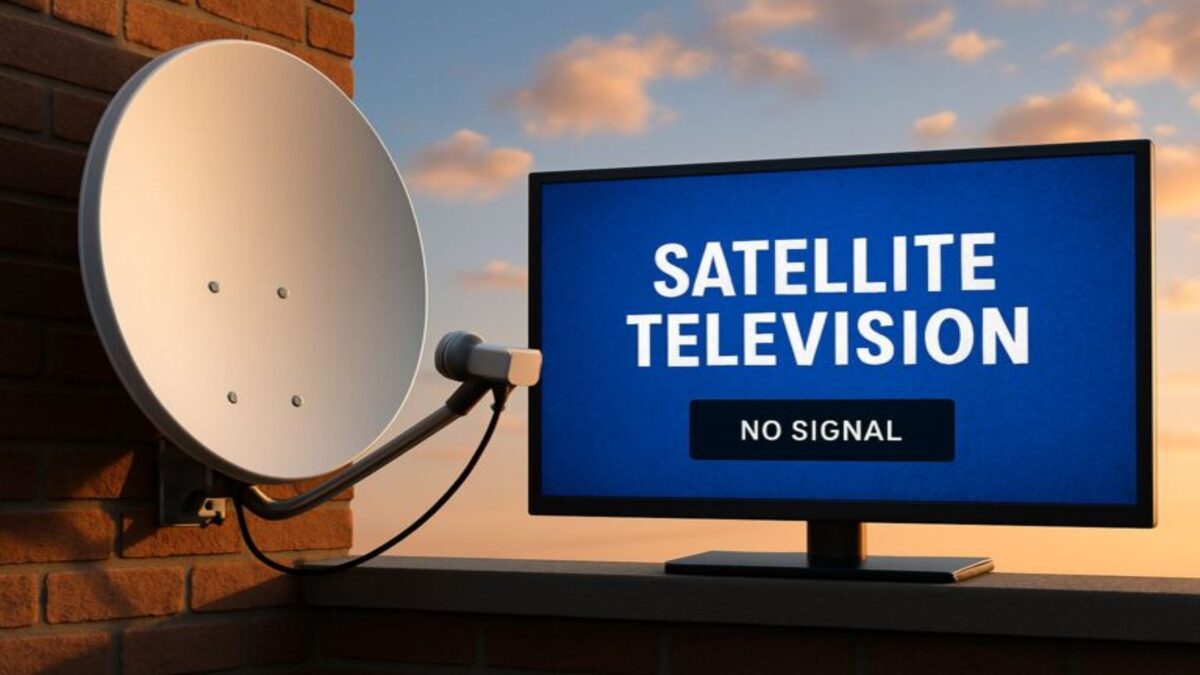
Yes, DISH TV works in most ordinary weather conditions, but heavy rain, thunderstorms, snow, and ice can temporarily interrupt satellite reception. These interruptions occur when weather weakens the signal traveling between the satellite and your receiving dish.
Most weather-related signal interruptions resolve when conditions improve. However, severe storms, equipment damage, or dish misalignment can cause longer-lasting problems.
Understanding how weather affects DISH can help you recognize temporary signal loss, troubleshoot safely, and know when professional service is necessary.
Does DISH TV Work in Bad Weather?
DISH satellite television is designed to operate in a variety of weather conditions, including ordinary rain, cloudy skies, and seasonal temperature changes.
However, satellite television requires a sufficiently strong signal between the receiving dish and the satellites serving your location.
Severe weather can interfere with that signal.
Common causes of weather-related reception problems include:
- Heavy rainfall that weakens satellite signals.
- Thunderstorms with intense precipitation.
- Snow or ice accumulating on the dish.
- Strong winds that damage or shift equipment.
- Fallen branches or debris obstructing the signal path.
- Power outages affecting the television or receiver.
Weather-related signal loss does not necessarily mean your DISH equipment is defective.
Why Does Heavy Rain Affect DISH TV?
Heavy rainfall can weaken satellite television signals through a process known as rain fade.
DISH uses radio-frequency signals transmitted between satellites and receiving equipment at customers’ homes.
As those signals pass through intense precipitation, water droplets can absorb and scatter some of the signal energy.
If the received signal becomes too weak, the television picture may freeze, become pixelated, or disappear temporarily.
Does Light Rain Affect DISH Reception?
Light rain generally does not cause significant reception problems when equipment is properly installed and the signal is strong.
However, actual performance depends on dish alignment, signal conditions, local weather, and other factors.
Can Heavy Thunderstorms Cause Signal Loss?
Yes. Intense thunderstorms can produce heavy rainfall that temporarily weakens satellite reception.
Signal loss may occur during the heaviest portion of a storm and improve as rainfall decreases.
However, there is no guaranteed number of minutes within which service will return.
Never attempt to inspect or adjust outdoor satellite equipment during lightning, strong winds, or other dangerous weather.
Does DISH TV Work in Snow?
DISH can operate during snowy weather, but snow accumulation may interfere with reception.
Falling snow can weaken satellite signals under certain conditions, particularly when precipitation is heavy or wet.
Snow accumulating on the dish or receiving components can also obstruct the signal.
Reception may improve after the snowfall ends or accumulated snow melts.
If snow remains on the dish, do not climb onto a roof or ladder to remove it.
Contact DISH support if the obstruction cannot be addressed safely from an accessible location.
Can Ice Cause DISH Signal Problems?
Yes. Ice buildup can interfere with satellite reception and may also place additional stress on mounting hardware or other equipment.
Ice can form on the dish surface and receiving components during freezing rain or repeated freeze-thaw conditions.
Do not chip ice from the dish, pour hot water over equipment, or attempt to remove frozen components.
These actions may damage equipment or create a safety hazard.
Wait for conditions to improve and contact DISH if reception does not return.
Does Wind Affect DISH TV Reception?
Wind does not generally weaken satellite radio signals in the same way that heavy rainfall does.
However, strong winds can affect reception indirectly by moving or damaging equipment.
For example, high winds may:
- Shift a poorly secured satellite dish out of alignment.
- Damage mounting hardware.
- Move tree branches into the signal path.
- Cause falling debris to strike the dish.
A dish that becomes misaligned may continue experiencing signal problems after the storm has passed.
Do not attempt to tighten outdoor mounting hardware or realign the dish yourself.
Persistent problems should be evaluated by a qualified technician.
Does Cloudy Weather Affect DISH TV?
Ordinary cloud cover generally has little noticeable effect on DISH satellite reception.
However, dense storm clouds associated with heavy precipitation can contribute to conditions that weaken the satellite signal.
Cloudy skies alone do not mean that DISH service will stop working.
How Long Does DISH Signal Loss Last During a Storm?
There is no universal recovery time for weather-related DISH signal loss.
Some interruptions are brief and resolve as rainfall decreases. Others may continue while severe weather remains in the area.
If the issue is caused only by temporary rain fade, service will often return automatically when signal conditions improve.
However, reception may not return normally if the storm damaged equipment, moved the dish, or left an obstruction in the signal path.
DISH recommends waiting for active storms to pass before investigating possible equipment problems.
What Does a DISH Signal Loss Error Mean?
When the receiver cannot obtain an adequate satellite signal, it may display a signal loss message or error code.
Common DISH signal loss errors include codes such as 015, 015a, and 002, depending on the receiver and the problem.
Possible causes include severe weather, obstructions, damaged equipment, loose connections, or dish misalignment.
A signal loss message does not automatically identify which cause is responsible.
For official troubleshooting instructions, visit DISH’s signal loss support guide.
Can DISH TV Work During a Power Outage?
Traditional DISH satellite television requires electrical power for the receiver and television.
If your home loses power, the equipment normally stops operating even if the satellite signal itself remains available.
A properly sized and compatible backup power system may allow certain equipment to continue operating during an outage.
However, backup power does not prevent rain fade, dish damage, or other satellite signal problems.
Any backup power arrangement should follow the equipment manufacturer’s safety instructions.
Can You Watch DISH Through the Internet During Signal Loss?
Some internet-connected DISH Hopper receivers can provide access to supported streaming programming when the satellite signal is temporarily unavailable.
DISH identifies this as a possible alternative during certain signal loss situations.
However, this option requires a functioning internet connection and compatible equipment.
Not every television channel or program is necessarily available through streaming.
If the storm also disrupts your internet connection or electrical power, streaming may not be available.
For more information, review DISH’s official signal loss troubleshooting instructions.
How to Troubleshoot DISH TV Signal Loss After Bad Weather
If your DISH signal disappears during a storm, the safest approach is to wait until dangerous weather has passed before troubleshooting.
Many weather-related interruptions resolve automatically when signal conditions improve.
If reception does not return, follow these steps.
1. Check Whether the Storm Has Passed
Heavy rainfall can temporarily weaken satellite reception.
If severe weather is still affecting your area, wait for conditions to improve before investigating further.
Do not go outside to inspect satellite equipment during lightning, strong winds, heavy rain, or icy conditions.
2. Check Your Television and Receiver
Make sure the television and DISH receiver have electrical power.
Confirm that the television is set to the correct input and that the receiver is responding to the remote control.
If your home recently experienced a power outage, allow the receiver time to restart and reconnect.
3. Check Accessible Indoor Connections
Inspect visible indoor cables for obvious damage or loose connections.
Follow DISH’s troubleshooting instructions for your receiver model.
Do not handle damaged electrical wiring or attempt repairs involving outdoor cables, rooftop equipment, or unfamiliar components.
4. Restart the Receiver if Recommended
If the weather has cleared and the receiver still displays an error, follow DISH’s official restart procedure.
Restarting the receiver may resolve certain temporary software or connection problems.
However, restarting cannot correct physical dish misalignment, damaged equipment, or an obstructed satellite signal.
5. Look for Obvious Outdoor Obstructions from a Safe Location
From the ground or another safe location, look for visible problems such as fallen branches, debris, or heavy snow accumulation.
Do not climb onto a roof, use a ladder, or attempt to move the satellite dish.
If an obstruction cannot be addressed safely, contact DISH for assistance.
6. Contact DISH if Reception Does Not Return
If your satellite signal remains unavailable after the weather clears and basic troubleshooting does not resolve the issue, contact DISH Customer Support.
Explain when the problem started, whether severe weather occurred, and which error message appears on the receiver.
This information can help determine whether additional troubleshooting or a technician visit is necessary.
Should You Remove Snow or Ice from a DISH Satellite Dish?
Snow or ice accumulation may interfere with reception, but removing it can create safety risks.
Never climb onto a roof or ladder to clear a satellite dish.
Do not strike the dish, chip away ice, pour hot water over equipment, or attempt to adjust the receiving components.
If the dish is not safely accessible, allow the snow or ice to melt naturally or contact DISH for guidance.
Customers should not risk injury or equipment damage to restore television service.
Can Better Dish Installation Reduce Weather-Related Signal Loss?
Proper satellite dish installation is important for reliable reception.
A qualified technician evaluates satellite visibility, selects an appropriate mounting location, secures the equipment, and aligns the dish.
A correctly installed system may have a better signal margin than equipment that is poorly aligned or obstructed.
However, even a properly installed satellite dish can experience rain fade during sufficiently severe weather.
Professional installation cannot guarantee uninterrupted service during every storm.
Can Trees and Buildings Make Weather Problems Worse?
Yes. Trees, buildings, and other obstacles can reduce the available satellite signal.
Branches that grow into the signal path may create reception problems even during ordinary weather.
Wind, snow, and ice can also move branches into positions that obstruct the dish.
If your DISH reception repeatedly fails during relatively mild weather, an obstruction or equipment alignment problem may be contributing to the issue.
Do not attempt to reposition the dish yourself.
Ask DISH whether a technician should evaluate the installation location.
Can You Prevent DISH TV from Going Out During Storms?
No satellite television system can completely eliminate the possibility of weather-related signal interruptions.
However, several precautions can help reduce avoidable problems.
- Have the dish professionally installed and aligned.
- Keep the required satellite signal path free from avoidable obstructions.
- Report loose or damaged equipment rather than attempting repairs.
- Follow the manufacturer’s maintenance recommendations.
- Keep the receiver and indoor connections protected from moisture and damage.
- Consider an appropriate backup viewing option for important programming.
Specialized snow-management equipment may be available for some satellite installations, but compatibility and installation requirements should be confirmed with the provider.
Do not install unauthorized accessories or modify outdoor equipment without approval.
Is DISH More Affected by Weather Than Cable or Streaming TV?
Satellite television, cable television, and internet streaming have different vulnerabilities.
DISH Satellite Television
DISH relies on satellite signals traveling through the atmosphere, so intense precipitation can temporarily weaken reception.
Its main advantage is that traditional satellite television does not require a home broadband connection to receive supported channels.
Cable Television
Cable television generally does not experience rain fade because programming reaches the home through wired infrastructure.
However, storms can damage cables, utility poles, network equipment, and electrical infrastructure.
Internet Streaming
Streaming services rely on a functioning internet connection and compatible devices.
Storm-related power outages, damaged infrastructure, or internet congestion can interrupt streaming.
No television delivery method is completely immune to severe weather.
Does DISH Guarantee Service During Bad Weather?
Customers should not assume that DISH guarantees uninterrupted satellite reception during severe weather.
Satellite signals can be affected by environmental conditions outside the provider’s control.
Any advertised pricing guarantee, equipment protection plan, or service promotion should be distinguished from a guarantee of continuous reception.
For questions about current service protections, technician visits, or possible billing adjustments, review your DISH agreement and contact the provider directly.
When Should You Request Professional DISH Service?
Professional assistance may be appropriate when:
- Reception remains unavailable after severe weather has passed.
- The receiver repeatedly displays signal loss errors during otherwise normal weather.
- The dish or mounting hardware appears damaged.
- A tree or structure obstructs the satellite signal.
- The dish appears to have shifted after strong winds.
- Basic troubleshooting does not restore service.
Contact DISH Customer Support to determine the appropriate troubleshooting or service procedure.
For new installations or qualifying professional installation inquiries, Spacelink Installs may also be able to assist in select service areas.
Frequently Asked Questions
Does DISH TV Work During Heavy Rain?
DISH can continue operating during rain, but intense precipitation may temporarily weaken the satellite signal and cause picture interruptions or complete signal loss.
Does DISH TV Go Out Every Time It Rains?
No. Ordinary rainfall does not necessarily interrupt DISH reception. Signal problems are more likely during intense precipitation or when equipment has alignment or obstruction issues.
How Long Does DISH Take to Come Back After a Storm?
There is no guaranteed recovery time. If the interruption is caused only by rain fade, service often returns automatically as conditions improve. Equipment damage or misalignment may require professional attention.
Does Snow Affect DISH TV?
Yes. Heavy snowfall and accumulated snow or ice can interfere with satellite reception. Do not climb onto roofs or ladders to clear equipment.
Can Strong Winds Knock Out DISH TV?
Yes. Strong winds can damage equipment, shift an improperly secured dish, or move branches into the satellite signal path.
Does Cloudy Weather Affect DISH?
Ordinary cloud cover generally has little noticeable effect on satellite television reception. Heavy precipitation associated with storms is a more significant concern.
Will DISH Work During a Power Outage?
Traditional DISH receivers and televisions require electrical power. Without power, they normally stop working even if the satellite signal remains available.
Can DISH Switch to Internet Streaming During Signal Loss?
Certain compatible internet-connected Hopper receivers may provide access to supported streaming programming during satellite signal interruptions. Availability depends on the receiver, programming rights, and a functioning internet connection.
Should I Realign My DISH Satellite Dish After a Storm?
No. Dish alignment requires specialized procedures and should be handled by a qualified technician. Do not attempt rooftop or outdoor equipment adjustments yourself.
Does DISH Offer a Weather Reliability Guarantee?
Do not assume that a DISH pricing promotion or equipment protection program guarantees uninterrupted reception during severe weather. Review the current service terms for any applicable protections.
Final Answer: Does DISH TV Work in Bad Weather?
Yes. DISH TV works in most ordinary weather conditions, but heavy rain, thunderstorms, snow, and ice can temporarily interrupt satellite reception.
Many weather-related interruptions resolve automatically when conditions improve. However, persistent signal loss may indicate equipment damage, dish misalignment, or an obstruction.
Proper professional installation and a clear satellite signal path can help reduce avoidable reception problems, but no satellite television system can guarantee uninterrupted service during every storm.
If you’re exploring DISH TV service or need assistance with a qualifying professional installation, contact Spacelink Installs.
Spacelink Installs provides professional installation for Viasat, Starlink, Amazon Leo, and DISH TV in select service areas. All service and installation availability is subject to address qualification.